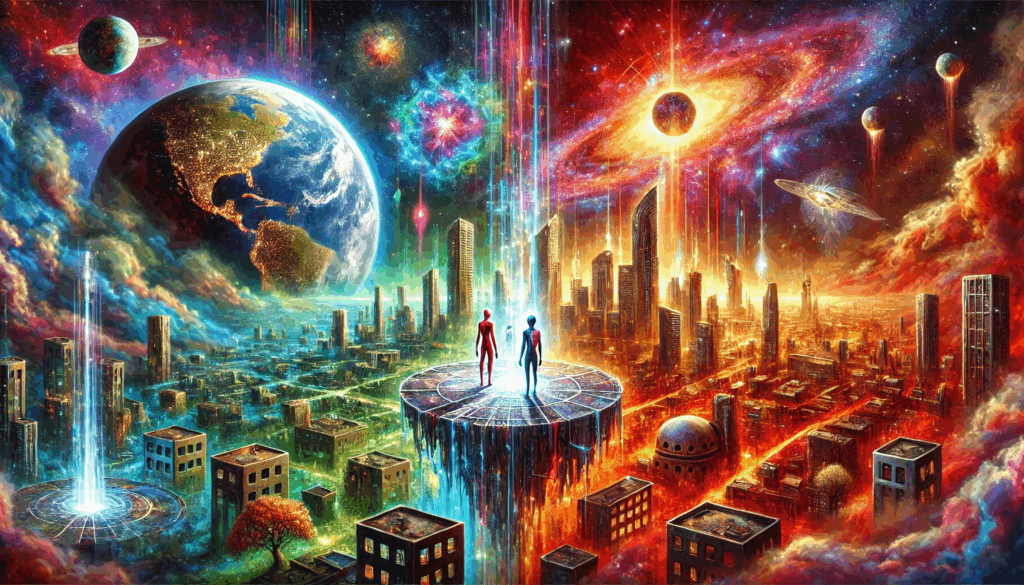
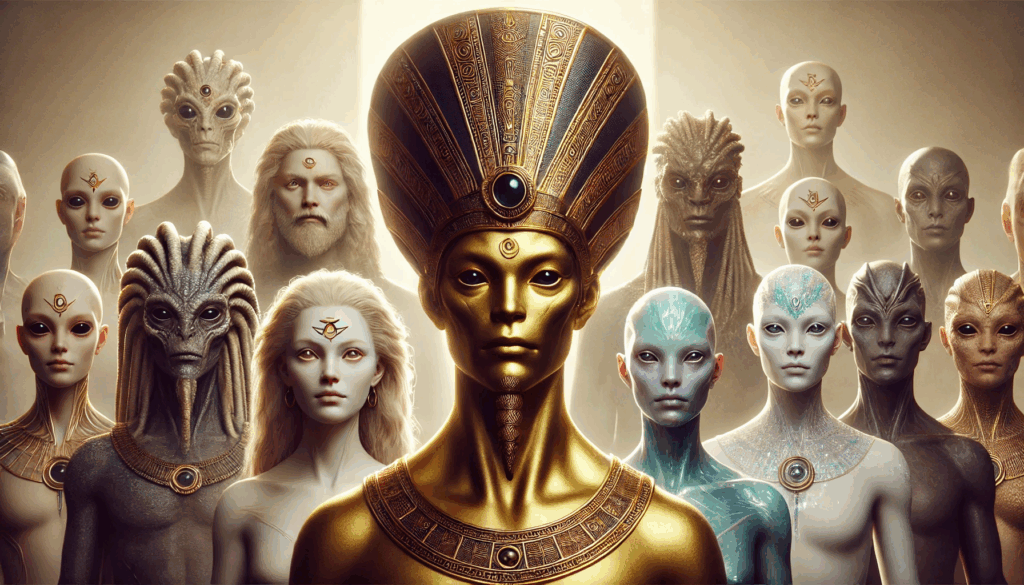
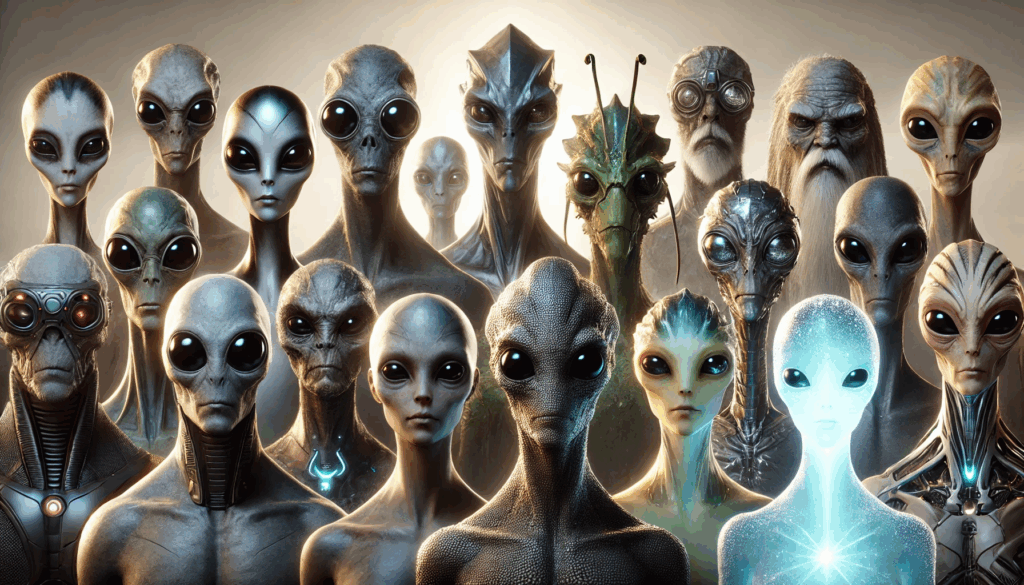
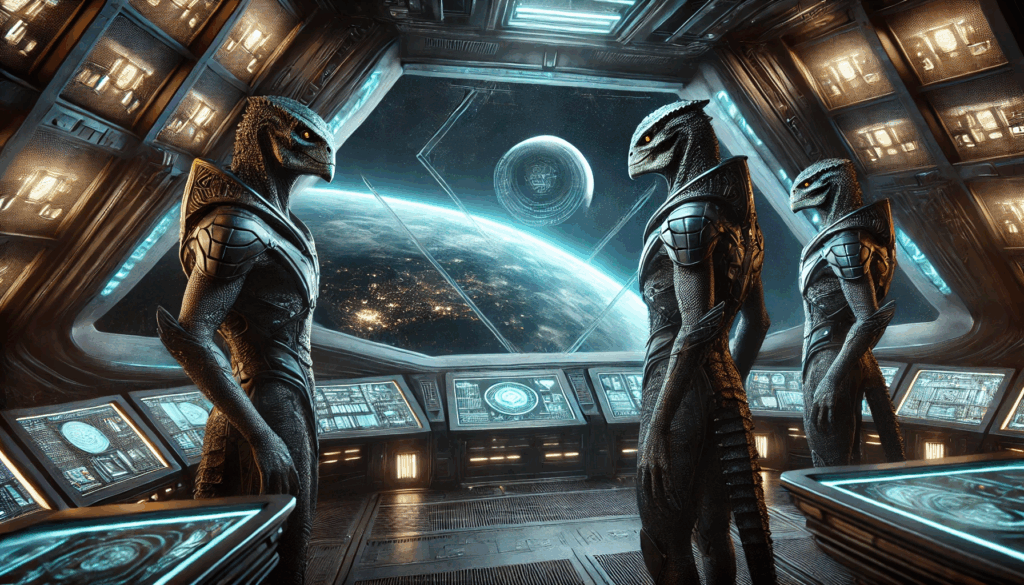
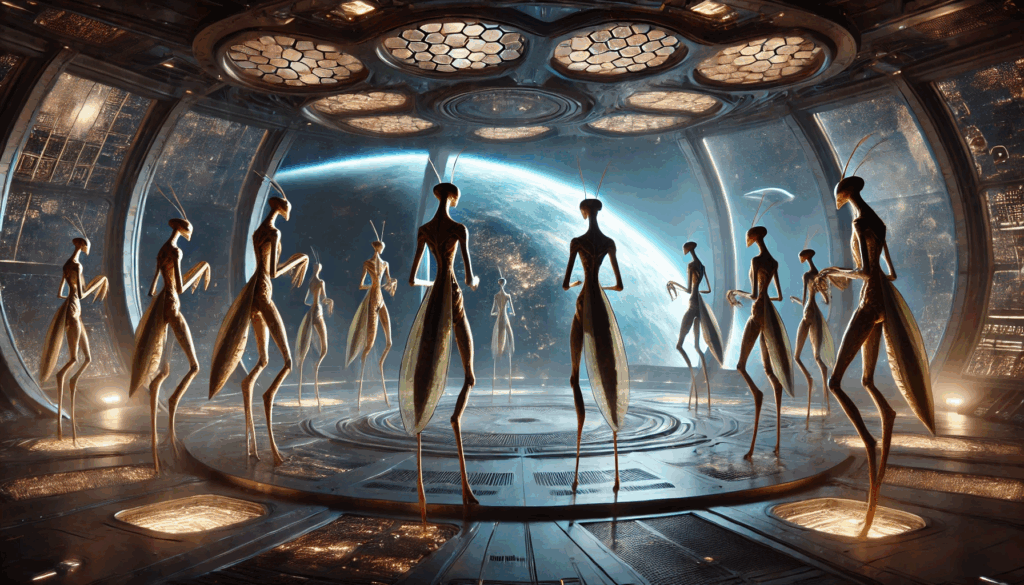
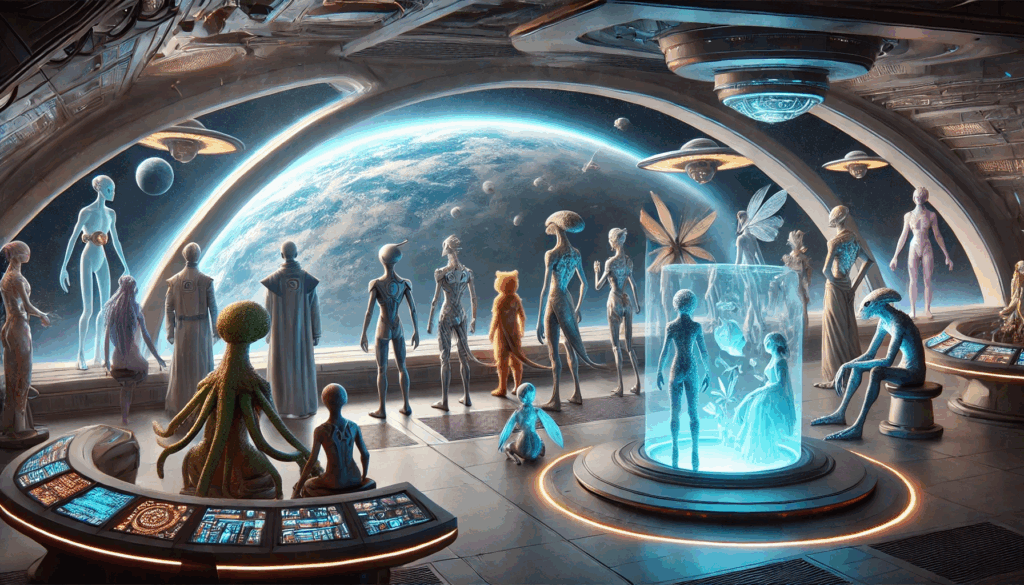
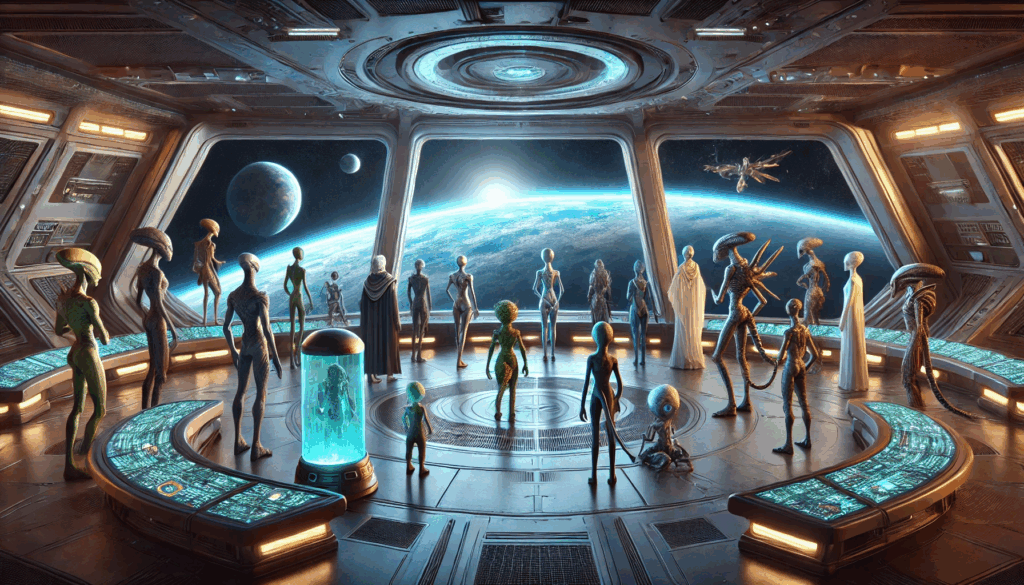
EARTH UNDER REVIEW: OBSERVED BY THE COSMOS A vivid, surreal portrayal of alien beings standing on a celestial observation platform, witnessing the contrast between Earth’s beauty and its decay. Below them, a city glows with both vibrant life and ominous collapse, symbolizing humanity’s potential and neglect. In the sky, cosmic wonders swirl, silently judging a civilization on the edge.
“Through Alien Eyes: A Report from Earth”
By Janet Kira Lessin with Minerva – June 2025
If a benevolent extraterrestrial species were to visit Earth—not to conquer, but to observe—they would likely land not in our capital cities or technological marvels, but in the spaces in between.
They would see a child sleeping in a tent beneath a neon billboard advertising luxury condos. A man screaming at ghosts on a subway bench while tourists step over him. A woman working two jobs, rationing her insulin, and skipping meals so her kids can eat.
To us, these scenes have become almost normal. To them, they would be incomprehensible.
“This species,” they might report, “has solved most of its major problems in theory. But not in practice.”
A World of Solvable Suffering
They would note that Earthlings have:
Cures for diseases, but allow them to spread unchecked
Empty homes and people without shelter
Enough food to feed everyone, yet millions starve
Advanced knowledge of trauma, but a justice system that ignores it
Vast resources, but hoard them in the hands of the few
In their interstellar council chambers, such behavior might be considered a moral and developmental failure, not a lack of intelligence, but rather a lack of empathy applied on a large scale.
“They know better,” the aliens would say. “But they have not yet chosen better.”
The Barbarism of Avoidable Harm
What must it look like from above?
Nations with billion-dollar weapons systems, yet crumbling hospitals.
Politicians are debating whether another human deserves clean water.
The sick are treated as sinners. The poor are treated as criminals.
A species willing to destroy the climate of its own home for short-term gain.
From the outside, it would not appear that humanity lacks the technology to thrive. It would appear that humanity lacks the collective will to evolve.
What They Might Say About Us
“Barbaric” might not refer to our tools or our tribes, but to the fact that we normalize suffering that could be eliminated.
“Primitive” might not mean without technology, but without planetary ethics.
We imagine ourselves as advanced because we build rockets, yet deny housing to the sick. We call ourselves civilized because we have courts and laws, yet let people rot for lack of care. We prize liberty, but trap people in jobs to afford medication.
They might shake their heads—or whatever their species does to express pity—and ask:
“Why do they tolerate what they could so easily transform?”
The Good News They Would See
And yet—if they looked closer, deeper—they would also see beacons of light.
Volunteers are feeding strangers in the streets.
Doctors and nurses in war zones are healing without pay.
Teachers are fighting for children whom others have given up on.
Artists and visionaries are dreaming of worlds not yet born.
Elders passing down wisdom, children seeing through the lies, truth-tellers risking everything.
They would see that the soul of Earth is not dead. It is dormant.
They would see that the solutions exist—not only in data and policy papers, but in the hearts of the people.
They would wait. And hope.
Because in the grand story of the cosmos, there is always a moment when a young species awakens and chooses love over fear, unity over division, healing over harm.
What If That Moment Is Now?
This is the lens through which we begin this article series.
Not with condemnation. Not with shame. But with a mirror—and a choice.
What would Earth look like if we fixed what is fixable? What would it mean to be truly civilized? How can we become a world that would make even the stars proud?
Series Title:EARTH: A PLANET UNDER REVIEW — Would We Be Invited to the Federation?
Complete Article Series Index:
Through Alien Eyes: A Report from Earth
Universal Health Care: The Compassionate Cure
Mental Illness on the Streets: The Legacy of Reagan’s Cuts
The Cost of Abandonment: Homelessness in a Land of Excess
Undocumented but Not Unworthy: Health Care Without Borders
Criminalizing Poverty: Turning the Poor into Profit
When Wealth Becomes a Sickness: Hoarding as Mental Illness
Pain for Profit: The Business of Suffering
A New Deal for Renters and Workers
Trauma-Informed Justice: Ending the Cycle of Hurt
Healthcare for the Planet: Connecting Environmental and Human Health
From Emergency Room to Living Room: Community-Based Care
The Cost of Apathy: Why the Federation Might Say No
A Civilization on the Edge: Final Evaluation from the Galactic Council
EARTH: A PLANET UNDER REVIEW Would We Be Invited to the Federation? By Janet Kira Lessin with Minerva
MASTER INDEX OF ARTICLES
PROLOGUE
Through Alien Eyes: A Report from Earth
An opening transmission from an ET observer who questions whether humanity is ready for cosmic inclusion. Frames the entire series.
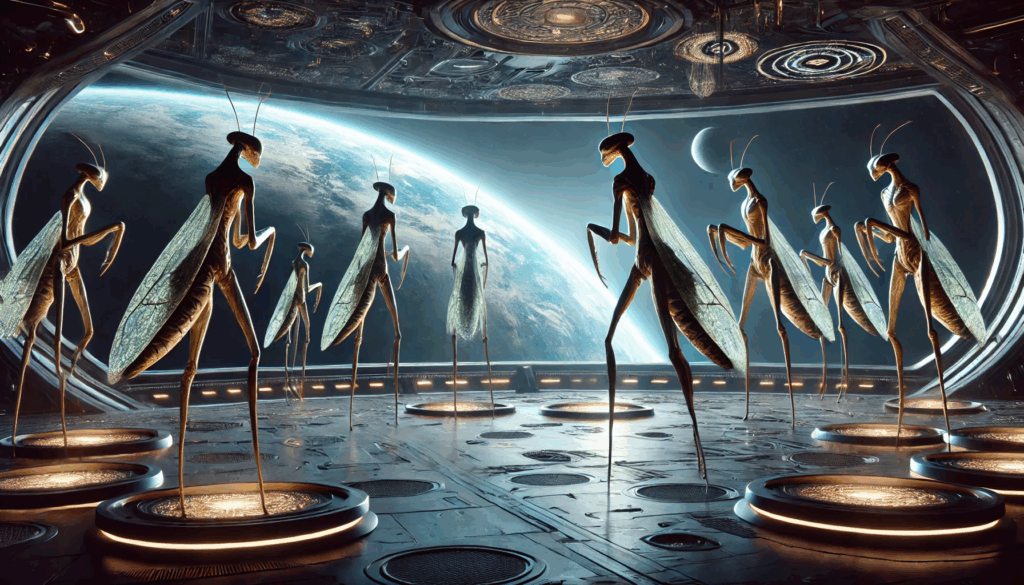
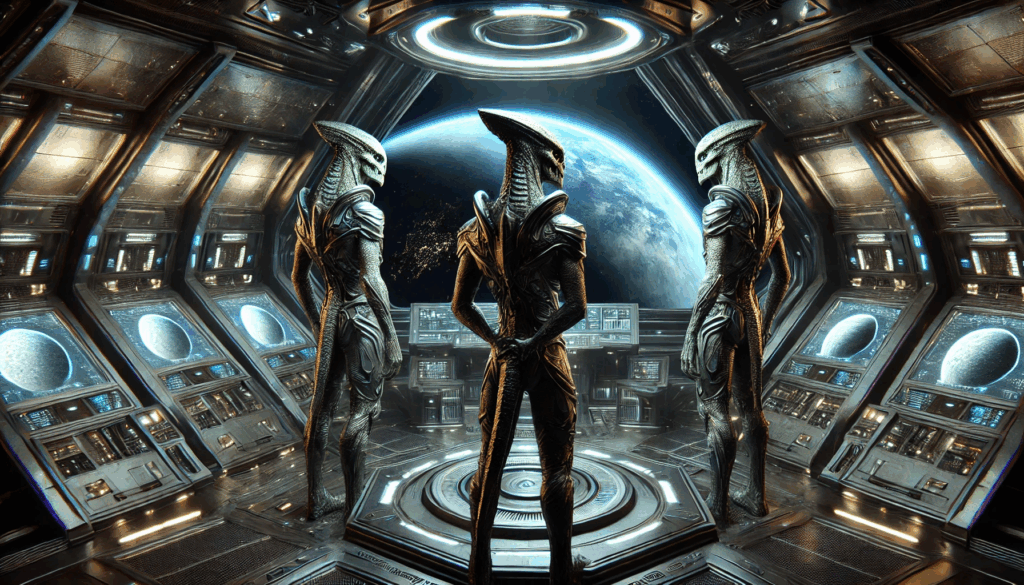
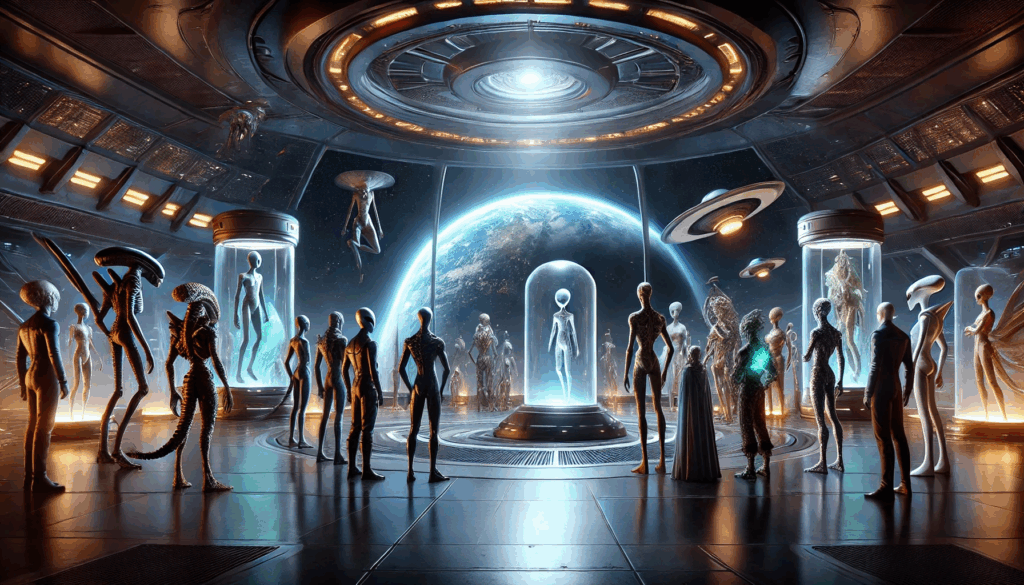
TITLE: A COUNCIL OF WORLDS A gathering of diverse alien lifeforms—grey, insectoid, aquatic, crystalline, and luminous—stand shoulder to shoulder aboard a peaceful starship, gazing at Earth. This scene reflects the possibility that the galaxy is watching, not to invade, but to witness whether humanity will reach its full potential.
CORE ARTICLES
Universal Health Care: The Compassionate Cure
Examines the irrationality of for-profit health care from an extraterrestrial lens. Proposes universal, preventive, and efficient care as the baseline for any civilization.
Mental Illness on the Streets: The Legacy of Reagan’s Cuts
Tracks how deinstitutionalization without replacement care led to mass suffering. Suggests community care, housing, and trauma-informed services.
The Cost of Abandonment: Homelessness in a Land of Excess
Explores systemic economic cruelty and the moral failure of housing scarcity. Offers Housing First and structural reform as solutions.
Undocumented but Not Unworthy: Health Care Without Borders
Discusses how denying care to undocumented immigrants increases suffering and danger for all. Calls for public health systems that transcend borders.
Criminalizing Poverty: Turning the Poor into Profit
Shows how legal systems prey on the poor for fines and jail cycles. Proposes restorative justice and support over punishment.
When Wealth Becomes a Sickness: Hoarding as Mental Illness
Argues that excessive wealth accumulation is a pathology. Advocates treatment, wealth caps, and a shift to a care-based economy.
Pain for Profit: The Business of Suffering
Exposes industries built on agony: prisons, pharma, poverty. Envisions a new economy centered on healing.
A New Deal for Renters and Workers
Confronts the unsustainable imbalance of work and cost of living. Offers solutions in wage reform, housing rights, and labor dignity.
Trauma-Informed Justice: Ending the Cycle of Hurt
Details the psychological damage caused by the justice system. Suggests trauma-aware courts and healing pathways.
Healthcare for the Planet: Connecting Environmental and Human Health
Frames environmental destruction as a public health crisis. Offers holistic solutions rooted in planetary care.
From Emergency Room to Living Room: Community-Based Care
Makes the case for decentralized health systems rooted in accessibility and local support.
The Cost of Apathy: Why the Federation Might Say No
Warns that inaction, polarization, and disconnection may lead to disqualification from higher civilizations. Calls for moral evolution.
CONCLUSION
A Civilization on the Edge: Final Evaluation from the Galactic Council
Offers a fictional “report” from the Federation. Will humanity be invited—or quarantined? The choice is still ours.
This series is a call to conscience. A planetary mirror. And a guide to help humanity remember who we are—and who we could be.
Tags: extraterrestrial observation, alien perspective, first contact ethics, human civilization, Earth society, Galactic Federation, social evolution, awakening humanity, global justice, readiness for contact
Facebook Description: What would a peaceful alien race think if they visited Earth and saw how we treat one another? Would we be invited to the stars—or warned to grow up first?
X (Twitter) Description: Would aliens invite us to the Federation? Not yet. We must evolve. #EarthUnderReview #ETPerspective #FirstContact